
If you’re shopping for dancewear or getting ready for ballet, gymnastics, or figure skating, leotard vs tights can be confusing. They often appear together, yet they aren’t the same type of clothing.
A leotard is a one-piece garment that covers the torso and hips, while tights are close-fitting legwear that covers some or all of the legs. A leotard can be worn alone, and tights can be worn separately. In activities such as ballet, however, wearing both is common.
The difference becomes much clearer when you look at coverage, construction, purpose, fabric, fit, and activity. This guide explains those differences in practical terms so you can choose the right garment without guessing.
Quick Answer: Leotard vs Tights
A leotard covers the torso and hips as one connected garment, while tights primarily cover the legs. They serve different purposes, although dancers and performers often wear them together.
| Feature | Leotard | Tights |
| Main coverage | Torso and hips | Legs |
| Construction | One-piece garment | Separate legwear |
| Covers the torso? | Yes | Usually no |
| Covers the legs? | Usually little or none | Yes, depending on style |
| Common in ballet | Yes | Yes |
| Common in gymnastics | Yes | Sometimes |
| Common in figure skating | Sometimes | Yes |
| Can be worn together? | Yes | Yes |
| Main purpose | Secure, streamlined body coverage | Leg coverage, warmth, layering, or performance |
Here’s the easiest way to remember it:
Leotard = torso coverage.
Tights = leg coverage.
They’re not competing garments in every situation. In many dance outfits, they work as a pair.
What Is a Leotard?
A leotard is a close-fitting, one-piece garment that covers the torso and hips while leaving the legs largely exposed. It may have no sleeves, short sleeves, or long sleeves.
The garment takes its name from Jules Léotard, a 19th-century French acrobat associated with the early development of the one-piece performance outfit. Over time, the garment became closely connected with dance, gymnastics, and other movement-based activities.
Modern leotards come in many styles, but their basic purpose remains the same: they provide secure coverage without adding loose fabric that can interfere with movement.
What Are Leotards Used For?
Leotards are particularly useful when an activity involves repeated stretching, jumping, turning, bending, or inversion.
You’ll commonly see them in:
- Ballet
- Gymnastics
- Contemporary dance
- Jazz dance
- Figure skating
- Acrobatic performance
- Theater and stage performance
- Circus performance
The exact design depends on the activity.
A ballet leotard may emphasize a clean, simple silhouette. A gymnastics leotard may incorporate more decorative elements for competition or performance. A long-sleeved version may provide additional coverage during training.
Why Do Dancers and Gymnasts Wear Leotards?
The main advantage is stability.
A regular shirt can move independently from the lower body. During a deep stretch or an upside-down movement, it may ride up or bunch around the waist.
A leotard connects the upper and lower portions of the garment. That keeps it much more secure.
It also gives teachers and coaches a clearer view of body positioning. In activities where alignment matters, fitted clothing can make the position of the shoulders, hips, knees, and legs easier to observe.
A leotard isn’t simply about looking professional. Its construction solves a practical movement problem.
Common Leotard Designs
Leotards vary considerably in appearance.
Common features include:
- Sleeveless cuts
- Short sleeves
- Long sleeves
- Scoop necklines
- Higher necklines
- Open-back designs
- Mesh panels
- Different leg cuts
- Decorative details
- Training and performance styles
The best design depends on the activity rather than fashion alone.
For example, a dancer may prioritize comfort and simplicity during daily training but choose a more elaborate design for a stage performance.
What Are Tights?
Tights are close-fitting garments designed primarily to cover the legs. Depending on their style, they may extend from the waist to the ankles or continue over the feet.
Unlike a leotard, tights don’t normally cover the torso as part of the same garment.
The word tights describes a broad category. Dance tights, athletic tights, fashion tights, and skating tights aren’t necessarily made for the same purpose.
That distinction matters when choosing them.
What Are Tights Used For?
Tights can provide several practical benefits:
- Leg coverage
- Warmth
- Modesty
- Layering
- A smooth visual appearance
- Protection from some environmental conditions
- Activity-specific support or compression
Dancers commonly wear tights with leotards. Athletes may wear performance tights with a sports top. People also wear fashion tights under dresses and skirts.
So the context matters.
Common Types of Tights
Different activities call for different constructions.
Footed tights cover the entire foot.
Footless tights stop around the ankle and leave the foot uncovered.
Convertible tights include an opening that lets the wearer expose part of the foot when needed.
Stirrup tights use a strap beneath the foot while leaving much of the foot uncovered.
Athletic tights are designed for exercise and may emphasize stretch, moisture management, or compression.
Dance tights are designed for movement and performance. They can come in several foot constructions and fabric weights.
Choosing the right type is more important than simply choosing something labeled “tights.”
What Are Tights Made Of?
Tights can contain a range of fibers, including:
- Nylon
- Polyester
- Spandex
- Elastane
- Cotton
- Blended performance fibers
Synthetic fibers are common because they can provide stretch, durability, shape recovery, and relatively quick drying.
Spandex and elastane are especially important when a garment needs substantial stretch. However, a fabric’s overall performance depends on its complete fiber blend and construction.
A garment that stretches well but doesn’t recover its shape can eventually become loose or baggy.
That’s why stretch and recovery should be considered together.
Leotard vs Tights: The Main Differences
The clearest comparison comes down to where each garment sits on the body and what job it performs.
Coverage Is the Biggest Difference
A leotard primarily covers the torso and hips.
Tights primarily cover the legs.
This means you can wear a leotard without tights when you don’t need additional leg coverage. You can also wear tights without a leotard when another top provides the upper-body coverage.
When you wear both, you create a more complete fitted outfit.
Construction Is Different
A leotard is a single connected garment.
Tights are separate legwear.
That difference affects how they behave when you move.
The leotard’s connected construction helps keep the garment anchored around the body. Tights, meanwhile, focus on following the movement and shape of the legs.
Their Purposes Overlap, but Aren’t Identical
A leotard can provide:
- Secure torso coverage
- Freedom of movement
- A streamlined fit
- A base for additional layers
Tights can provide:
- Leg coverage
- Warmth
- Modesty
- Layering
- Activity-specific performance features
Neither one is automatically better.
The right choice depends on what you need the clothing to do.
Leotard vs Tights for Ballet
Ballet is one of the best examples of how these garments complement each other.
A traditional ballet training outfit may include a leotard, tights, and ballet shoes. The leotard keeps the torso covered and fitted. The tights cover the legs and can add warmth and visual continuity.
Fitted dancewear can also make certain aspects of technique easier for an instructor to see.
For example, during a plié or tendu, a teacher may need to observe the dancer’s leg and hip alignment. Loose clothing can make those details harder to see.
However, ballet clothing isn’t identical everywhere. Studio dress codes vary, and students should follow the requirements of their particular school or class.
Why Do Ballet Dancers Wear Tights?
Tights can provide:
- Additional leg coverage
- Warmth
- A consistent appearance
- Easier layering
- A fitted surface that doesn’t interfere with movement
The type of tights matters, too.
A dancer may choose footed, footless, or convertible tights depending on the class and footwear.
Leotard vs Tights for Contemporary and Modern Dance
Contemporary and modern dance often allow more flexibility in clothing choices than traditional ballet.
A dancer might wear:
- A leotard
- A leotard with tights
- Leggings
- A fitted top with dance pants
- A unitard
- Rehearsal clothing suited to the choreography
The important considerations are movement, comfort, visibility, and studio requirements.
A costume designer may also select different garments based on the visual concept of a performance.
So while leotards and tights remain useful, they’re not mandatory for every style of contemporary movement.
Leotard vs Tights for Gymnastics
Gymnastics makes the functional difference particularly obvious.
Gymnasts perform movements such as:
- Tumbling
- Handstands
- Jumps
- Splits
- Rotations
- Rolls
- Flips
- Balance skills
These movements can cause loose clothing to shift significantly.
A properly fitted gymnastics leotard stays close to the body, which reduces loose fabric and helps maintain consistent coverage during movement.
Why Are Leotards Common in Gymnastics?
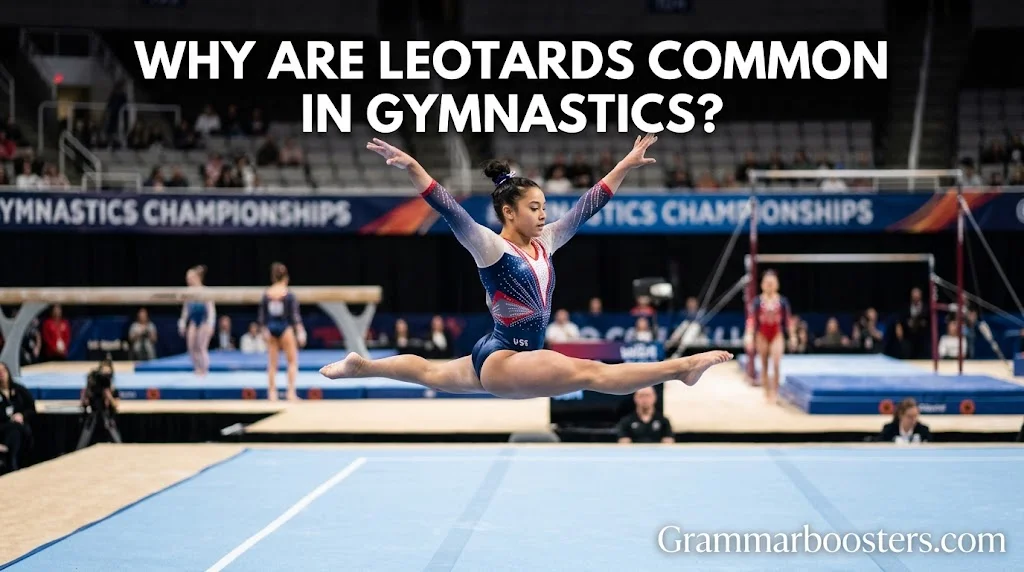
A leotard provides several practical benefits.
It stays in place. The one-piece design reduces the tendency of a shirt to ride up.
It supports movement. Stretch fabrics allow the body to bend, extend, and rotate.
It helps coaches observe technique. Body alignment is easier to see through fitted clothing.
It creates a consistent competition appearance. Competitive gymnastics often has specific clothing expectations.
Tights aren’t generally a replacement for the leotard in gymnastics. They may appear in particular training situations or outfits, but the leotard remains the central garment in many gymnastics settings.
Leotard vs Tights for Figure Skating
Figure skating presents a different clothing challenge.
Skaters perform on ice while wearing costumes that need to support movement, provide suitable coverage, and work visually with the performance.
Tights are common in figure skating because they provide leg coverage and can complement skating costumes.
Some skating tights are designed specifically to interact with skates and boots. Their construction can differ from ordinary fashion tights.
Depending on the costume, tights may be worn in different ways, including designs intended to cover the skate boot or sit beneath another layer.
This is another reason not to treat all tights as interchangeable.
Leotard vs Tights: Material and Durability
Fabric choice can determine whether dancewear remains comfortable after repeated training or quickly becomes worn.
Stretch and Recovery
Both leotards and tights need enough stretch to accommodate movement.
But recovery matters just as much.
Imagine stretching an elastic band. It expands when pulled and moves back toward its original shape afterward.
Performance fabrics need similar recovery characteristics.
Poor recovery can contribute to:
- Sagging
- Baggy knees
- Loose waistbands
- Wrinkling
- Loss of shape
- An inconsistent fit
The garment should move with you without permanently changing shape after ordinary use.
Breathability and Moisture Management
Dance and athletic activities can generate considerable heat and sweat.
Synthetic performance fabrics are often chosen because they can be engineered to manage moisture and dry relatively quickly.
However, “breathable” doesn’t mean every fabric feels cool.
Fabric thickness, knit structure, fiber content, fit, and environmental conditions all influence comfort.
For intense training, a lightweight performance fabric may feel very different from a heavier garment designed for warmth.
Durability and Wear
Repeated stretching places stress on both fabric and seams.
Durability depends on:
- Fiber composition
- Fabric construction
- Material thickness
- Seam quality
- Elastic quality
- Friction
- Washing practices
- Frequency of use
Tights can be especially vulnerable to snags when they use fine or delicate fabric.
Leotards can experience wear around seams, leg openings, and other high-stress areas.
Following the manufacturer’s washing and drying instructions can help protect elasticity and fabric quality.
Leotard vs Tights: Design and Flexibility
A garment can look flexible and still restrict movement if it doesn’t fit correctly.
That’s why fabric, pattern, seams, and sizing all matter.
Leotard Design and Movement
A leotard must accommodate movement through the:
- Shoulders
- Chest
- Back
- Waist
- Hips
The garment shouldn’t pull sharply when you raise your arms or stretch your torso.
A leotard that’s too short through the torso can create uncomfortable tension. One that’s too large may bunch or shift.
Tights Design and Movement
Tights must accommodate movement through the:
- Hips
- Thighs
- Knees
- Calves
- Ankles
- Feet, when covered
A good pair should remain smooth without excessive bunching.
The waistband also matters. If it continually slips down, the problem may come from sizing, elastic recovery, or construction.
Which Is More Flexible?
Neither garment is automatically more flexible.
A leotard is designed to permit movement through the torso and hips. Tights are designed to follow the legs.
The actual freedom of movement depends on:
- Fabric stretch
- Fabric recovery
- Pattern design
- Seam placement
- Size
- Body proportions
- Garment construction
A poorly fitted garment can restrict movement regardless of what type it is.
How Should a Leotard Fit?
A leotard should feel secure without causing painful pressure or restricting normal movement.
The torso length deserves particular attention.
If the garment is too short, you may feel pulling across the shoulders or torso. If it’s too long, excess material can bunch.
Before committing to a size, check:
- Shoulder comfort
- Torso length
- Leg openings
- Neckline
- Overall stretch
- Coverage
- Movement
Try ordinary movements appropriate to the activity. Raise your arms, bend, stretch, and move naturally.
The goal isn’t to find the tightest garment possible.
The goal is a secure fit that moves with your body.
How Should Tights Fit?
Tights should sit smoothly against the legs without excessive sagging, bunching, or painful pressure.
Pay particular attention to the waistband.
A loose waistband may slide during movement. An overly tight one can become uncomfortable during a long class or training session.
Check for:
- A secure waistband
- Smooth fabric through the legs
- Minimal bunching behind the knees
- Proper foot placement
- Appropriate opacity
- Comfortable stretch
If tights constantly fall, don’t assume that stretching the waistband will solve the problem. The size, cut, or fabric recovery may simply be wrong for your body.
Can You Wear Tights With a Leotard?
Yes. Wearing tights with a leotard is common, particularly in dance.
The combination works because each garment performs a different function.
The leotard provides secure torso coverage. The tights cover the legs and can provide warmth or additional coverage.
Depending on the garment and setting, tights may be worn over or under a leotard.
There’s no universal arrangement for every dancer. Studio rules, costume design, tights construction, and personal preference can all affect the choice.
Can You Wear a Leotard Without Tights?
Yes.
A leotard can be worn alone when additional leg coverage isn’t required.
This may make sense in certain dance classes, rehearsals, performance situations, or warm environments.
The decision depends on:
- Activity
- Temperature
- Dress requirements
- Personal comfort
- Desired coverage
A leotard alone provides considerably less leg coverage than a leotard paired with tights.
Can You Wear Tights Without a Leotard?
Yes.
Tights don’t require a leotard.
Athletic tights can be worn with sports bras, tanks, shirts, or other athletic tops. Fashion tights commonly appear beneath dresses and skirts. Dance tights can also be paired with different tops depending on the class or performance.
The key is to choose tights designed for the job.
Fashion tights and athletic tights may look similar, but their performance characteristics can be very different.
Leotard vs Tights: Pros and Cons
| Garment | Advantages | Potential drawbacks |
| Leotard | Secure torso coverage, streamlined fit, excellent movement freedom | Provides little leg coverage |
| Tights | Leg coverage, warmth, layering, many styles | Can snag, bunch, or lose elasticity |
| Leotard + tights | Combines torso and leg coverage while preserving mobility | Adds another layer and may feel warmer |
This comparison shows why asking which garment is “better” isn’t quite the right question.
The better question is:
Which garment solves the clothing needs of your activity?
Common Misconceptions About Leotards and Tights
Are Leotards and Tights the Same Thing?
No.
A leotard is a one-piece garment that covers the torso and hips. Tights are close-fitting legwear.
They often appear together, especially in dance, but they remain separate garments.
Do Leotards Cover Your Legs?
Traditional leotards generally leave most of the legs exposed.
If a one-piece garment extends down the legs, you’re likely looking at a unitard or another full-body design rather than a traditional leotard.
Are Tights the Same as Leggings?
Not exactly.
Traditional tights are generally thinner and more hosiery-like. Leggings usually use more substantial fabric and are commonly worn as standalone bottoms.
Modern athletic clothing can blur this boundary, so the terms aren’t always used consistently.
Are Tights Pants?
Traditional tights aren’t usually treated as the same garment category as pants.
Tights generally use thinner, close-fitting fabric and are often designed as hosiery or a layering garment. Leggings and athletic bottoms tend to use thicker materials and are more commonly worn as standalone lower-body clothing.
Are Leotards Only for Dancers?
No.
Leotards are also used in gymnastics, skating, acrobatics, theater, and other performance activities.
Their defining feature is their one-piece construction, not the specific activity in which someone wears them.
Are All Tights the Same?
Definitely not.
Dance tights, fashion tights, athletic tights, and figure-skating tights can have different materials, thicknesses, seams, foot constructions, and performance characteristics.
Always consider the intended activity rather than choosing based on appearance alone.
Choosing Between a Leotard and Tights
The simplest approach is to start with the coverage you need.
Choose a Leotard When You Need:
- Secure torso coverage
- A one-piece garment
- Freedom of movement
- A fitted base layer
- Clothing suitable for gymnastics or dance
- Less loose fabric during movement
Choose Tights When You Need:
- Leg coverage
- Additional warmth
- A fitted layer
- Dance or performance legwear
- Athletic legwear
- Coverage beneath a costume
Choose Both When You Need:
- Torso and leg coverage
- A classic dance outfit
- Additional warmth
- A streamlined performance look
- A secure base with covered legs
This makes the decision much easier.
If the main question is “Do I need my torso covered?” think leotard. If it’s “Do I need my legs covered?” think tights.
Leotard vs Tights: Activity Guide
| Activity or situation | Typical choice | Why |
| Ballet class | Leotard + tights | Secure fit and leg coverage |
| Gymnastics | Leotard | Keeps clothing secure during complex movement |
| Contemporary dance | Depends on class | Clothing requirements vary |
| Figure skating | Costume + tights | Leg coverage and performance needs |
| Athletic training | Athletic tights + suitable top | Designed for movement and performance |
| Warm dance rehearsal | Leotard or lighter combination | Less insulation may be comfortable |
| Cold dance studio | Leotard + tights + optional warm-up | Adds coverage and warmth |
| Everyday outfit with a dress | Fashion tights | Provides leg coverage and styling |
Specific studio, team, competition, or costume requirements should always take priority over general clothing advice.
What to Look for When Buying a Leotard
Buying the right leotard involves more than choosing your favorite color.
Consider the Activity
A gymnastics leotard may have different design requirements from a ballet leotard.
Start with the environment in which you’ll use it.
Check the Torso Fit
Torso length can make or break comfort.
The garment should sit securely without creating excessive tension when you stretch or raise your arms.
Examine the Fabric
Look for a fabric that offers enough:
- Stretch
- Recovery
- Durability
- Comfort
- Breathability
The ideal balance depends on your activity.
Check the Coverage
Consider the neckline, sleeves, back, and leg openings.
A design that looks great but doesn’t meet your studio or team requirements isn’t the right choice.
What to Look for When Buying Tights
Tights also deserve careful consideration.
Select the Right Type
Choose between footed, footless, convertible, stirrup, dance, athletic, or other styles according to your needs.
Check Opacity
If coverage matters, don’t judge opacity from the product photo alone. Fabric color, thickness, stretch, and lighting can all affect how opaque tights appear.
Consider the Waistband
The waistband should remain secure during movement without digging painfully into your skin.
Think About Durability
If you train several times each week, prioritize materials and construction designed for repeated use.
Occasional fashion wear doesn’t require the same durability as daily dance training.
A Practical Example: Choosing Dancewear for Ballet Class
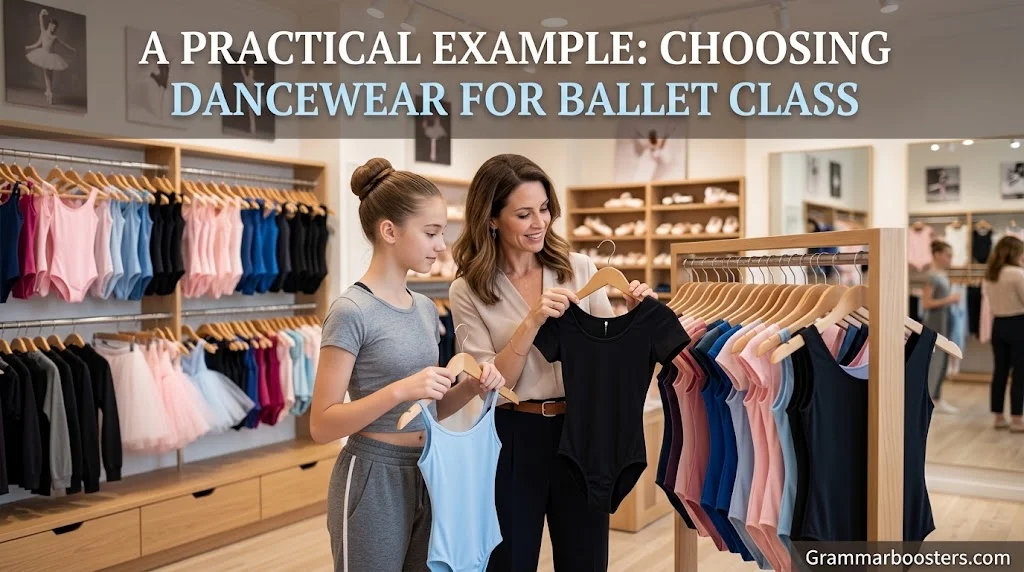
Imagine you’re starting a ballet class at a studio where fitted dancewear is expected.
You have three choices:
Option A: Leotard only
This provides secure torso coverage but leaves your legs uncovered.
Option B: Tights only
This provides leg coverage but doesn’t provide the fitted torso garment commonly used in ballet.
Option C: Leotard + tights
This combines both functions and creates the familiar ballet training outfit.
If the studio expects a leotard and tights, Option C is the obvious choice.
But if the studio allows more flexibility, your decision can also depend on temperature, comfort, and personal preference.
The example illustrates an important point: clothing decisions should start with the activity’s actual requirements rather than assumptions about what every dancer must wear.
A Practical Example: Choosing Clothing for Gymnastics
Now consider someone attending gymnastics training.
The activity involves tumbling, handstands, jumps, and rapid body movement.
A fitted gymnastics leotard makes practical sense because it keeps the torso covered without a loose shirt moving around.
Tights may provide additional coverage in certain training situations, but they don’t replace the core function of the leotard.
Here, the garment’s construction matters more than its appearance.
Leotard vs Tights: What Matters Most?
When comparing the two, focus on five things:
- Coverage — Which parts of the body need to be covered?
- Activity — What movements will the garment need to handle?
- Fit — Does it stay secure without restricting movement?
- Fabric — Does the material provide suitable stretch, recovery, and comfort?
- Requirements — Does your studio, team, school, or performance have a dress code?
These five questions usually lead you to the right choice quickly.
Conclusion:
Understanding leotard vs tights comes down to one simple idea: they serve different purposes, even though both are common in dance, gymnastics, skating, and other performance activities. A leotard covers the torso and leaves the legs mostly uncovered, while tights cover the legs and can be worn alone or paired with a leotard. Your choice depends on the activity, dress code, comfort, coverage, and the type of movement you need.
For ballet and gymnastics, a leotard often provides the secure fit and freedom of movement you need. Tights can add warmth, coverage, and comfort, especially during training or colder conditions. You can also wear both together when the activity or personal preference calls for extra coverage. The best option is the one that fits comfortably, stays in place, and lets you move confidently.
FAQs
What is the main difference between a leotard and tights?
A leotard is a fitted garment that covers the torso and usually leaves the legs exposed. Tights are close-fitting garments designed to cover the legs and may extend over the feet, depending on the style. A leotard is generally worn as a one-piece top-and-body garment, while tights primarily provide leg coverage.
Can you wear tights with a leotard?
Yes, you can wear tights with a leotard. This combination is especially common in ballet, dance, gymnastics training, and figure skating. Tights can provide additional warmth and leg coverage while the leotard keeps the torso securely covered. The appropriate combination depends on the activity, studio or team dress code, weather, and your personal comfort.
Are leotards or tights better for ballet?
For ballet, a leotard is usually the primary garment, while tights are commonly added for leg coverage and a traditional dance outfit. A leotard allows instructors to see the body’s alignment and movement clearly. Tights can make the outfit warmer and more comfortable. Your ballet school may also have specific requirements for colors, styles, or coverage.
Are leotards used in gymnastics?
Yes. Leotards are widely used in gymnastics because their close-fitting design allows athletes to move freely without loose fabric getting in the way. They provide secure coverage during jumps, rolls, turns, and other movements. Gymnastics leotards can vary in style, material, and decoration depending on whether they’re designed for practice, competition, or recreational classes.
Are tights the same as leggings?
No. Tights and leggings are similar because both cover the legs, but they aren’t identical. Tights are generally thinner, more flexible, and often designed as dance or performance wear. Leggings are usually thicker and more substantial, making them more suitable for casual outfits, workouts, or everyday wear. The exact difference depends on the garment’s material and design.
Can you wear a leotard by itself?
Yes, a leotard can be worn by itself when the activity, dress code, and personal preference allow it. Dancers and gymnasts often wear leotards alone during classes or performances. Some people add tights, leggings, skirts, shorts, or warm-up clothing for additional coverage. Always follow the requirements of your studio, team, or activity.
Which is more comfortable, a leotard or tights?
Comfort depends on fit, fabric, construction, and personal preference. A well-fitting leotard should feel secure without digging into the shoulders or torso. Good tights should stretch comfortably without slipping, bunching, or creating excessive pressure. Neither garment is automatically more comfortable. Choosing the right size and a breathable, flexible fabric makes the biggest difference.
Do tights keep your legs warm?
Yes, tights can help keep your legs warm, particularly when they’re made from thicker or warmer materials. Dance tights and performance tights come in different weights and constructions, so their warmth varies. In colder settings, dancers may layer tights with warm-up clothing. Lightweight tights can also provide coverage without creating as much warmth during intense activity.
How should a leotard fit?
A leotard should fit closely without restricting movement. The fabric should lie smoothly against your body without excessive wrinkles, sagging, or uncomfortable pressure. The leg openings shouldn’t dig into your skin, and the straps or shoulders should stay securely in place. If the leotard constantly rides up or feels restrictive, you may need a different size or cut.
How do you choose between a leotard and tights?
Choose based on what you need the garment to do. If you need torso coverage and unrestricted leg movement, a leotard is usually the better choice. If you mainly need leg coverage or warmth, tights may be more appropriate. For activities such as ballet, you may choose both. Always consider comfort, movement, dress codes, fabric, and fit.

I’m Sarah M, an English content specialist dedicated to helping people improve their grammar, spelling, vocabulary, and writing skills. I love answering common language questions and turning difficult grammar concepts into simple, reader-friendly lessons. My goal is to make English learning enjoyable and accessible for anyone who wants to become a better communicator.