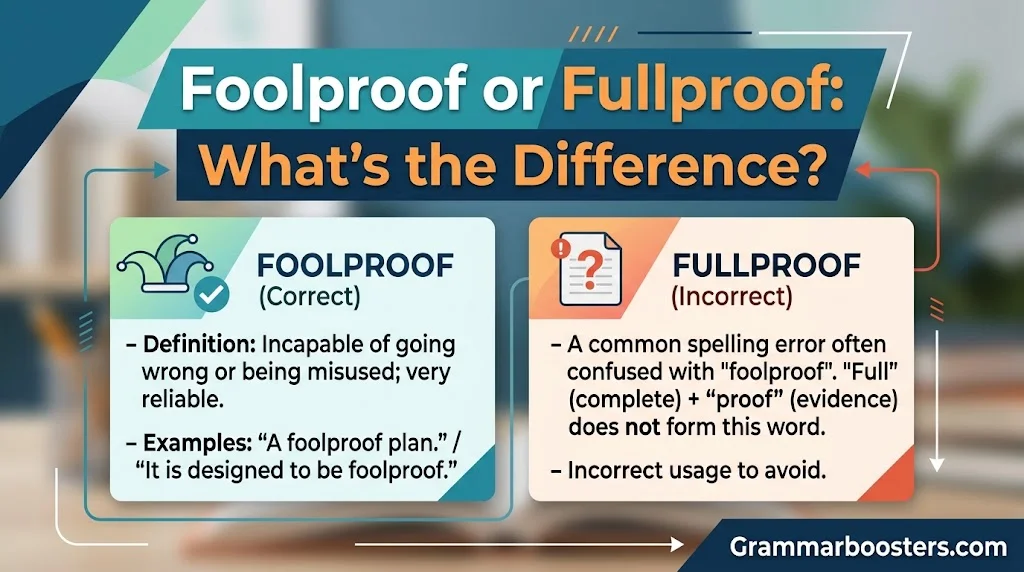
Foolproof or Fullproof: What’s the Difference?
Have you ever written “fullproof” and then stopped to wonder whether it should actually be “foolproof”? You’re not alone. These two spellings look and sound … Read More
Have you ever written “fullproof” and then stopped to wonder whether it should actually be “foolproof”? You’re not alone. These two spellings look and sound … Read More
Is it “of course” or “ofcourse”? If you’ve ever hesitated before typing the phrase, you’re not alone. The words often sound closely connected in everyday … Read More
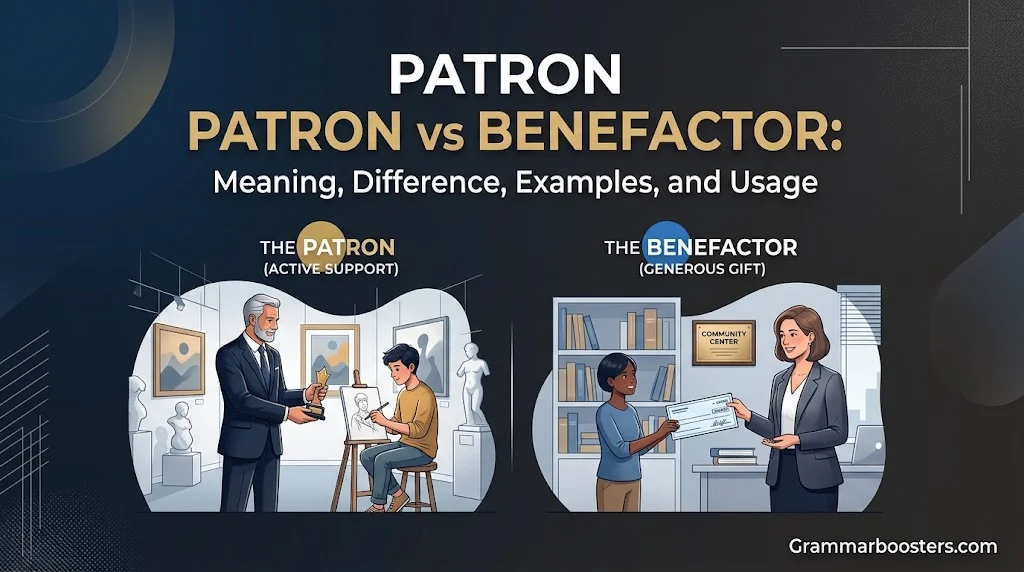
Patron and benefactor both describe people who help or support others, so it’s easy to treat them as synonyms. They aren’t quite the same, though. … Read More

Have you ever heard someone say, “Run like the wind!”? You probably understood the message immediately: run very fast. The phrase “run like the wind” … Read More

Have you ever heard someone say, “He’s quite a piece of work” and wondered whether that was a compliment or an insult? The phrase “a … Read More

Have you ever wondered whether “ageing” or “aging” is the correct spelling? Both are correct, but their use depends mainly on American and British English. … Read More

Yes, if you’re repeating your own exact words as a direct quotation, you normally need quotation marks. Your identity as the original speaker doesn’t change … Read More

“Stick a fork in it” is an informal English idiom meaning something is finished, complete, or over. It comes from the image of checking cooked … Read More

The difference between having and having had becomes much easier once you stop looking at the words separately and start looking at the sentence’s timeline. … Read More

A verb root is the core part of a verb that carries its basic meaning. When you understand the root, many verb forms become easier … Read More
Grammar Boosters is a learning platform designed to make English grammar simple, clear, and practical for everyone. The website provides easy explanations, real examples, and helpful tips to improve writing and speaking skills.